

How to Find the Right Starch Supplier in India: 7 Things Every Buyer Must Check
Introduction
Sourcing starch for your business is not as simple as placing an order and waiting for delivery. Starch is a critical input material used across food processing, textile manufacturing, paper production, pharmaceuticals, and several other industries. The quality of starch you use directly affects the quality of your final product. A wrong choice of supplier can result in inconsistent quality, production delays, compliance failures, and financial losses.
India has hundreds of starch manufacturers and traders, which makes the selection process overwhelming for many buyers. So how do you separate a genuinely reliable supplier from one who simply appears credible on paper? This blog walks you through seven practical things every buyer must check before finalising a starch supplier in India.
1. Check What Type of Starch They Actually Manufacture
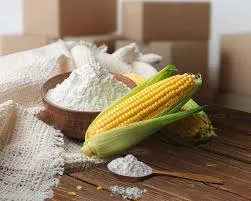
The first thing to verify is whether the supplier manufactures the specific type of starch your process requires. Starch comes in many forms including native maize starch, tapioca starch, modified starch, thin boiling starch, oxidized starch, cationic starch, and pregelatinized starch. Each serves a different industrial purpose.
Many traders in India source starch from multiple manufacturers and resell it under their own name. A trader may claim to supply any grade you need, but they have no control over consistency or quality. Always prefer a direct manufacturer who produces the specific grade you need in their own facility. This gives you traceability, consistent quality, and a reliable supply chain.
2. Verify Manufacturing Capacity and Infrastructure
A supplier who cannot meet your volume requirements will eventually become a bottleneck for your production. Before committing to a long-term relationship, ask about their annual manufacturing capacity, the number of production lines they operate, and whether they have a captive power supply to ensure uninterrupted production.
Infrastructure matters because larger, well-equipped facilities are better positioned to handle bulk orders, seasonal demand spikes, and export consignments without compromising delivery timelines. Suppliers with dedicated storage facilities and proper warehouse conditions also protect starch quality during holding periods, which is equally important for moisture-sensitive products.
3. Confirm Certifications and Compliance Standards
Certifications are not just paperwork. They are proof that a supplier follows defined quality systems, maintains safe manufacturing practices, and meets the regulatory requirements of the industries they serve.
For food grade starch, FSSAI certification is mandatory in India. For pharmaceutical applications, USP, IP, or BP compliance is required. For export orders, international buyers typically demand ISO 9001 certification as a baseline. Suppliers serving global markets often hold additional certifications like GMP, Sedex, Kosher, or Halal depending on their target markets.
Always ask for current, valid certification documents and cross verify them before placing your first order. A supplier who hesitates to share certification documents is a clear red flag.
4. Evaluate Product Consistency Through Testing
One batch of good starch does not make a reliable supplier. What matters is whether the quality is consistent across every batch, every month, throughout the year. Inconsistent viscosity, moisture content, ash levels, or particle size can disrupt your production process and damage your finished product quality.
Ask for a Certificate of Analysis for recent production batches. Check if the supplier has an in-house quality testing laboratory with proper equipment. A capable supplier will welcome product testing and will provide samples without hesitation. If a supplier avoids quality discussion or cannot share test data, that tells you everything you need to know.
5. Assess Their Raw Material Sourcing and Supply Chain
The quality of starch begins with the quality of the raw material. For maize starch, the source and variety of maize used, the moisture content at intake, and the storage conditions before processing all influence the final product. For tapioca starch, timely processing of freshly harvested cassava roots is critical because the raw material deteriorates quickly after harvest.
Ask your supplier where they source their raw materials, whether they have direct farmer relationships or long-term procurement agreements, and how they manage supply during lean agricultural seasons. A supplier with a stable, traceable raw material supply chain is far more reliable than one who procures opportunistically from open markets.
6. Review Their Export Experience and Market Reach
A supplier with export experience brings a different level of discipline to their operations. Export markets demand strict quality documentation, consistent product specifications, precise packaging standards, and adherence to shipping timelines. Suppliers who have successfully served buyers in multiple countries have already been tested against demanding quality requirements.
Even if you are a domestic buyer, choosing a supplier with export credentials gives you the assurance that their quality systems are robust enough to satisfy international standards. Check which countries they export to, what volumes they handle, and whether they have experience with your specific industry segment.
7. Evaluate After-Sales Support and Technical Capability
A good starch supplier does not just ship the product and disappear. They understand your application needs and help you choose the right grade for your process. When a quality issue arises, they respond quickly with data and solutions. When you need to scale up or switch grades, they guide you through the transition.
Ask whether the supplier has a technical team that can support your application requirements. Find out how they handle complaints, what their turnaround time is for quality queries, and whether they offer application-level consultation. The best suppliers act as long-term partners, not just vendors.
How SPAC Group Checks Every Box as a Leading Name Among Starch Suppliers in India
Finding a supplier who meets all seven criteria is not easy, but SPAC Group is one of the very few names in India that genuinely satisfies each one. Established in 1996 and operating from a 120-acre integrated facility in Erode, Tamil Nadu, SPAC Group manufactures tapioca starch, maize starch, and modified starch across three independent production plants. With a combined annual capacity exceeding one lakh metric tonnes, SPAC Group holds ISO 9001, GMP, FSSAI, and Sedex certifications, exports to over 20 countries, and maintains a full in-house quality laboratory that tests every batch before dispatch. As one of the most trusted Starch Suppliers in India, SPAC Group brings together manufacturing scale, certification depth, raw material traceability, and genuine technical support under one roof.