

Starch Manufacturer vs Supplier vs Exporter: What's the Difference?
If you have spent any time searching for starch on B2B directories, you have probably noticed that the terms “manufacturer,” “supplier,” and “exporter” get used interchangeably. Two listings can look almost identical, yet one company owns a production plant, and the other is simply reselling stock it bought from someone else. For a buyer, that difference can change your price, your quality control, your delivery timeline, and how much say you get over the final product.
This guide breaks down what each term actually means in the starch industry, when it makes sense to work with each type of business, and how to figure out which one is right for your order.
Quick Answer: A starch manufacturer produces starch directly from raw materials like maize or tapioca in its own factory. A starch supplier sources starch from manufacturers and resells it, often in smaller quantities. A starch exporter handles international shipping, documentation, and compliance to deliver starch across borders. Some companies, like established manufacturers, do all three.
What Is a Starch Manufacturer?
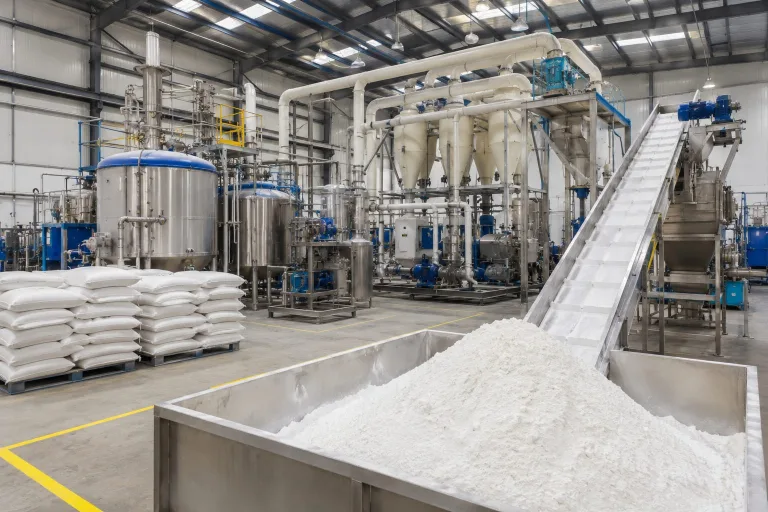
A starch manufacturer is a company that owns and operates the actual production facility. This means raw material procurement, wet-milling or extraction, drying, refining, and quality testing all happen under one roof, under one company’s direct control.
When you buy from a manufacturer, you are essentially going to the source. This matters more than it might seem in the starch industry, where even small variations in viscosity, moisture content, or purity can affect how a product performs in food, textile, paper, or pharmaceutical applications.
Among the leading starch manufacturers in India, companies that have run their own integrated plants for decades tend to offer more consistency batch after batch, simply because they control every stage of production themselves.
Advantages of Buying Directly from a Manufacturer
- Better pricing: there is no middleman margin built into the cost
- Direct quality control; batch traceability back to the exact production run
- Customization: native or modified starch grades can often be adjusted to your specific process requirements
- This is a core part of any solid industrial starch buyer guide, and a major reason large-volume buyers prefer going direct starch factory India sourcing routes
Limitations of Buying Directly from a Manufacturer
- Minimum order quantities (MOQs) are usually higher than what a supplier might accept
- Less flexibility for one-off or trial orders
- Smaller businesses testing a new formulation may find this route less practical until they scale up.
What Is a Starch Supplier?
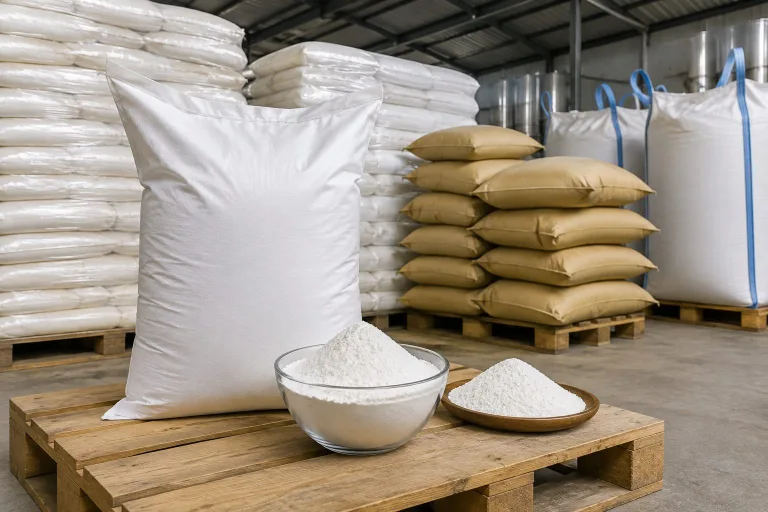
A starch supplier is typically an intermediary a trading company, distributor, or regional wholesaler that buys starch in bulk from manufacturers and resells it, often in smaller lot sizes or across specific geographic regions.
Working with starch suppliers in India makes sense in a few clear situations: when you need smaller quantities than a manufacturer’s MOQ allows, when you want faster regional delivery without waiting on factory dispatch schedules, or when you are still testing a new product line and don’t want to commit to bulk volumes yet.
The trade-off is usually a slightly higher price per unit, since the supplier’s margin is built into the cost. There’s also typically less visibility into which specific factory batch you’re receiving, compared to buying direct from a starch manufacturer.
None of this is hypothetical. These are the exact complaints buyers raise most often when a supplier hasn’t been properly checked out before that first bulk order goes through.
When Should You Buy from a Supplier Instead of a Manufacturer?
- Your order size is well below typical factory MOQs
- You need faster, localized delivery within a specific state or region
- You’re piloting a new product and want flexibility before scaling
- This is where the debate around starch trading company vs manufacturer usually comes down to volume and speed, not just price
What Is a Starch Exporter?
A starch exporter handles the part of the process that domestic manufacturers and suppliers don’t always manage themselves: international logistics. This includes export documentation, customs clearance, FOB or CIF shipping terms, and the compliance certificates that importing countries require.
Many manufacturers also operate as exporters, especially larger and more established ones. This is a meaningful distinction if you are an overseas buyer, because working with starch exporters in India who are also the actual manufacturer gives you both production quality control and export reliability in a single point of contact rather than adding another layer of communication between you and the factory.
Getting this right matters for anyone managing B2B starch sourcing or bulk starch procurement from overseas, where delays or documentation errors can hold up an entire shipment.
What to Check Before Choosing a Starch Exporter
- Valid export licenses and trade history
- FSSAI, ISO, or relevant international certifications
- A track record of on-time, compliant shipments under proper FOB starch export India terms
Manufacturer vs Supplier vs Exporter Side-by-Side Comparison
Factor | Manufacturer | Supplier | Exporter |
Owns production | Yes | No | Sometimes |
Pricing | Lowest (direct) | Slight markup | Varies + logistics cost |
MOQ | Usually higher | Flexible | Depends on shipment size |
Best for | Bulk/industrial buyers | Small/regional buyers | International buyers |
Understanding this difference between manufacturer and supplier and where an exporter fits into the picture is the first real step toward sourcing starch efficiently, whether you’re buying for a single production line or setting up a recurring international supply chain.
Which One Should You Choose?
There’s no single right answer here; it depends on your order volume, your budget, whether you need domestic or international delivery, and how much control you want over product specifications.
If you’re placing large, recurring orders and want the best pricing and full quality traceability, going direct to a manufacturer is usually the stronger choice. If your order is smaller or you need fast regional turnaround, a supplier may serve you better. And if you’re sourcing from overseas, working with a manufacturer that also exports directly removes an unnecessary layer from your supply chain.
Some companies, including well-established players in this space, function as manufacturer, supplier, and exporter at once, which is worth asking about directly before you commit to an order.
Frequently Asked Questions
Is it cheaper to buy starch directly from a manufacturer?
Usually yes, but only if your order meets the manufacturer’s MOQ. For smaller orders, a supplier may actually work out cheaper once you factor in minimum order penalties or added freight from a distant factory.
Can a manufacturer also be an exporter?
Yes. Many established manufacturers handle both domestic supply and direct international export themselves, without routing through a separate trading company.
What documents should I ask a starch exporter for?
At minimum, ask for a valid export license, FSSAI or ISO certification, and a Certificate of Analysis (CoA) for the specific batch you’re purchasing.
Do starch suppliers offer better after-sales support than manufacturers?
Not necessarily. Support quality depends on the individual company’s service standards, not on whether it’s classified as a manufacturer, supplier, or exporter.
Final Thoughts
Choosing between a starch manufacturer, supplier, and exporter isn’t just industry terminology; it directly affects your pricing, product consistency, and delivery reliability. Buyers who understand this distinction ask better questions upfront and avoid supply chain surprises later.
If you’re looking for a starch manufacturer, supplier, and exporter all under one roof with direct factory control and export experience across 20+ countries, get in touch for a quote or download the product brochure to see the full range available.