

What Is High-Temperature Drilling Starch Used for in Water-Based Drilling Fluids?
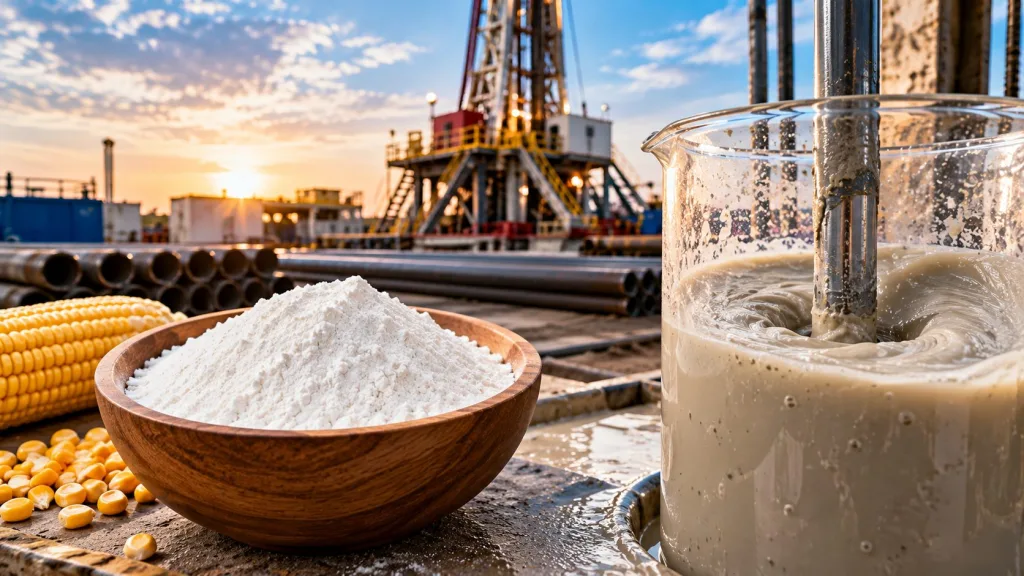
Drilling fluids play an important role in oil and gas drilling operations. They circulate through the drilling system, help transport rock cuttings, and support fluid management around the wellbore. Maintaining suitable drilling-fluid properties is essential for drilling operations, particularly when working under high-temperature conditions.
High-temperature drilling starch is a starch-based additive used in drilling-fluid applications where temperature tolerance and fluid-loss control are important considerations. SPAC Starch Products (India) Private Limited offers HT/High Temperature Drilling Starch for water-based drilling, stimulation, and completion fluids.
SPAC CATA, SPAC’s cationic wet-end starch, is developed for paper and board manufacturing to improve filler and fines retention while supporting internal sheet strength.
What Is High-Temperature Drilling Starch?
High-temperature drilling starch is a starch-based polymer designed for use in drilling-fluid systems exposed to elevated temperatures. According to SPAC, its high-temperature drilling starch is derived from unmodified starch containing amylopectin. The product is described as having fermentation stability and providing enhanced high-temperature fluid-loss performance when used with drilling fluids.
Its primary application is in water-based drilling, stimulation, and completion fluids. It is also intended for drilling, workover, and completion applications where fluid-loss control is required.
The product’s suitability depends on the drilling-fluid formulation, operating conditions, and required technical properties. Drilling-fluid professionals should therefore review the manufacturer’s published specifications and confirm suitability for their particular application.
Why Is Drilling Starch Used in Water-Based Drilling Fluids?
Water-based drilling fluids are used in drilling operations and may contain several additives to support the required fluid properties. Starch-based additives are used in these systems for fluid-loss control and related fluid-management functions.
SPAC describes its petroleum drilling starch as an additive used in water-based drilling, completion, and stimulation fluids. The company also identifies fluid-loss reduction and filtration control as important functions of its drilling starch products.
The main application considerations include:
- Fluid-loss control: Drilling starch is used to help control the amount of liquid that filters from the drilling fluid into surrounding formations.
- Filtration management: Fluid-loss-control additives help manage filtration through permeable surfaces encountered during drilling.
- Drilling-fluid properties: The product is used in formulations where the required fluid characteristics must be maintained under the intended operating conditions.
- High-temperature applications: High-temperature drilling starch is intended for drilling-fluid applications where elevated temperatures are relevant to product selection.
These functions depend on the product grade and the overall drilling-fluid formulation. The performance of an additive should be evaluated under the conditions relevant to the intended operation.
How Does High-Temperature Drilling Starch Support Fluid-Loss Control?
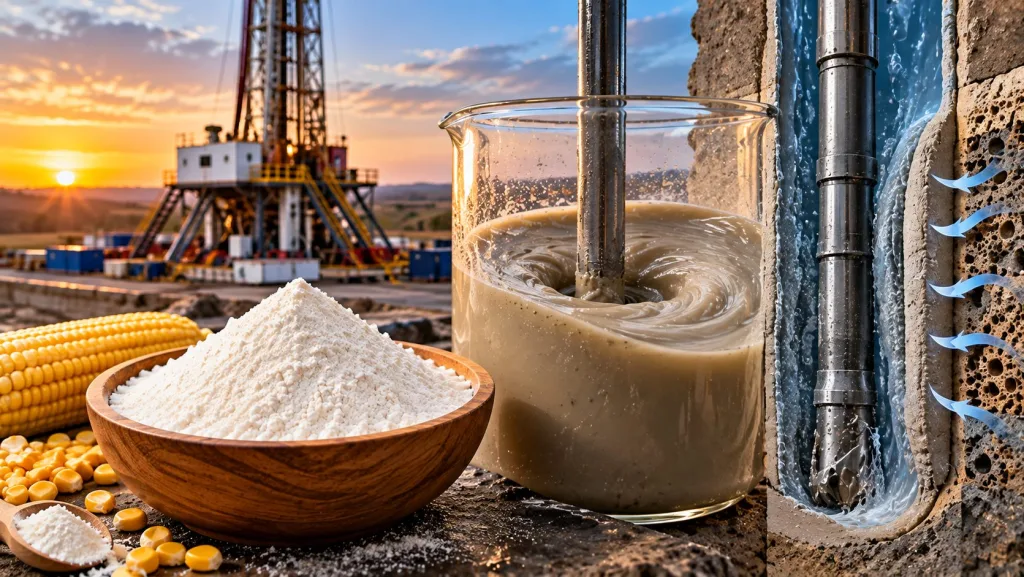
Fluid loss refers to liquid filtering out of a drilling fluid into the surrounding formation. Controlling filtration is an important consideration when managing drilling-fluid behaviour.
SPAC identifies high-temperature fluid-loss performance as a key application of its HT drilling starch. The product is designed to work in combination with drilling fluids and is described as suitable for fluid-loss control in drilling, workover and completion applications.
The role of the starch additive can be understood through the following points:
- It is incorporated into a suitable drilling-fluid formulation.
- Its behaviour is evaluated in relation to the required suspension and filtration properties.
- The formulation is assessed under relevant operating conditions, including temperature and salinity.
- Product selection is based on the published technical limits and the requirements of the drilling operation.
The additive should not be considered independently of the complete fluid system. Other ingredients, water conditions, and operational requirements can influence the properties of the final formulation.
What Makes High-Temperature Drilling Starch Different?
High-temperature drilling starch is intended for applications where the drilling-fluid system must function under elevated-temperature conditions. SPAC describes its product as having fermentation stability and providing enhanced fluid-loss performance at high temperatures when combined with drilling fluids.
The company’s product information also notes that temperatures above 150°F may be needed to activate the starch for effective rheology and fluid-loss control. The actual behaviour and suitability of the product should be established using the manufacturer’s current technical information and application-specific testing.
For buyers evaluating a product, the important considerations include:
- The intended drilling-fluid application.
- The operating temperature and water conditions.
- The required suspension properties.
- The required filtrate-volume limits.
- Moisture and residue specifications.
- Compatibility with the overall drilling-fluid formulation.
For product-specific information, review SPAC’s HT/High Temperature Drilling Starch page.
Technical Specifications of SPAC High-Temperature Drilling Starch
SPAC publishes technical limits for its high-temperature drilling starch. The following table summarises the specifications listed on the product page.
Parameter | Test condition or unit | Published limit |
Suspension properties | In 40 g/L salt water | 18 cP maximum |
Suspension properties | In saturated salt water | 20 cP maximum |
Filtrate volume | In 40 g/L salt water | 10 mL maximum |
Filtrate volume | In saturated salt water | 10 mL maximum |
Residue | Greater than 2,000 μm | No residue |
Moisture | Percentage | 10% maximum |
These values are the limits shown on SPAC’s published product page. Buyers should consult the latest technical data sheet to confirm the applicable test method, test conditions, and specifications before using the product in an operational formulation.
Technical limits should not be interpreted as guaranteed field performance under every drilling condition. Actual suitability must be evaluated against the requirements of the drilling-fluid system.
Applications of High-Temperature Drilling Starch
1. Water-Based Drilling Fluids
SPAC lists high-temperature drilling starch for use in water-based drilling fluids. In these systems, the product is used in connection with fluid-loss control and the required behaviour of the drilling fluid under operating conditions.
2. Workover Operations
The product is also described for workover applications where fluid-loss control is required. The appropriate grade and formulation should be selected according to the specific operation and its technical requirements.
3. Completion Fluids
SPAC identifies completion fluids as another application for high-temperature drilling starch. Product suitability should be confirmed for the intended fluid system rather than assumed across all completion operations.
4. Stimulation Fluids
The manufacturer also lists stimulation fluids among the product’s applications. Buyers should discuss their intended application and operating conditions with the supplier before selecting a product.
For broader application information, see SPAC’s Petroleum Drilling Starch page.
What Should Buyers Consider When Selecting Drilling Starch?
Selecting drilling starch requires an understanding of the application and the technical requirements of the fluid system. A product suitable for one set of conditions may not automatically be suitable for another.
Before selecting a high-temperature drilling starch product, buyers should consider the following:
- Operating conditions: Identify the expected temperature range and the relevant drilling-fluid conditions.
- Water characteristics: Confirm whether the application uses salt water or saturated salt water, as these are among the conditions specified in SPAC’s technical information.
- Fluid-loss requirements: Determine the filtration-control requirements for the intended formulation.
- Suspension properties: Review the applicable viscosity or suspension-property limits in the product documentation.
- Technical documentation: Request the current specifications and confirm that the test conditions match the intended application.
- Product suitability: Discuss the formulation and application with the manufacturer’s technical team.
These considerations help buyers assess the product using relevant technical information instead of relying on a product name alone.
Why Review SPAC’s Drilling Starch Product Information?
SPAC Starch Products (India) Private Limited manufactures starch products for several industrial applications, including petroleum and natural gas. Its product range includes petroleum drilling starch and HT/High Temperature Drilling Starch.
The company’s published information identifies water-based drilling, stimulation, and completion fluids as applications for its high-temperature product. It also provides technical limits relating to suspension properties, filtrate volume, residue, and moisture.
For drilling-fluid suppliers and procurement teams, reviewing these details is a useful starting point for evaluating whether the product matches an intended application. Technical suitability should be confirmed with the manufacturer before procurement or field use.
To discuss product specifications and application requirements, visit SPAC’s Contact Us page.
Frequently Asked Questions
What is high-temperature drilling starch used for?
High-temperature drilling starch is used in water-based drilling, stimulation, and completion fluids where fluid-loss control is required. SPAC also lists drilling, workover, and completion applications for its HT starch product.
How does drilling starch help control fluid loss?
Drilling starch is used as a fluid-loss-control additive in drilling-fluid formulations. Its suitability and performance depend on the product grade, fluid composition,n and operating conditions.
Is high-temperature drilling starch suitable for water-based drilling fluids?
SPAC lists its HT/High Temperature Drilling Starch for water-based drilling fluids. Buyers should confirm the suitability of the product for their specific formulation and operating conditions.
What technical specifications should buyers review?
Relevant published parameters include suspension properties in salt water, filtrate volume, residue,e and moisture. Buyers should refer to the current technical documentation for complete test conditions and applicable limits.
Can the same drilling starch be used for every drilling operation?
Not necessarily. Different drilling, workover, stimulation, and completion applications may have different requirements. Product suitability should be established using the operating conditions and technical specifications relevant to the application.
How can buyers enquire about SPAC high-temperature drilling starch?
Buyers can contact SPAC Starch Products (India) Private Limited through its website to discuss product information, technical specifications, and application requirements.
Conclusion
High-temperature drilling starch is used in water-based drilling, workover, stimulation and completion fluids where fluid-loss control and elevated-temperature performance are relevant. Its selection should be based on the operating conditions, required fluid properties, and verified product specifications.
SPAC Starch Products (India) Private Limited provides published information about its HT/High Temperature Drilling Starch, including technical limits for suspension properties, filtrate volume, residue, and moisture. Drilling-fluid professionals can review these details and contact SPAC to discuss the product’s suitability for their intended application.