

Cationic Starch for Filler Retention in Paper Manufacturing
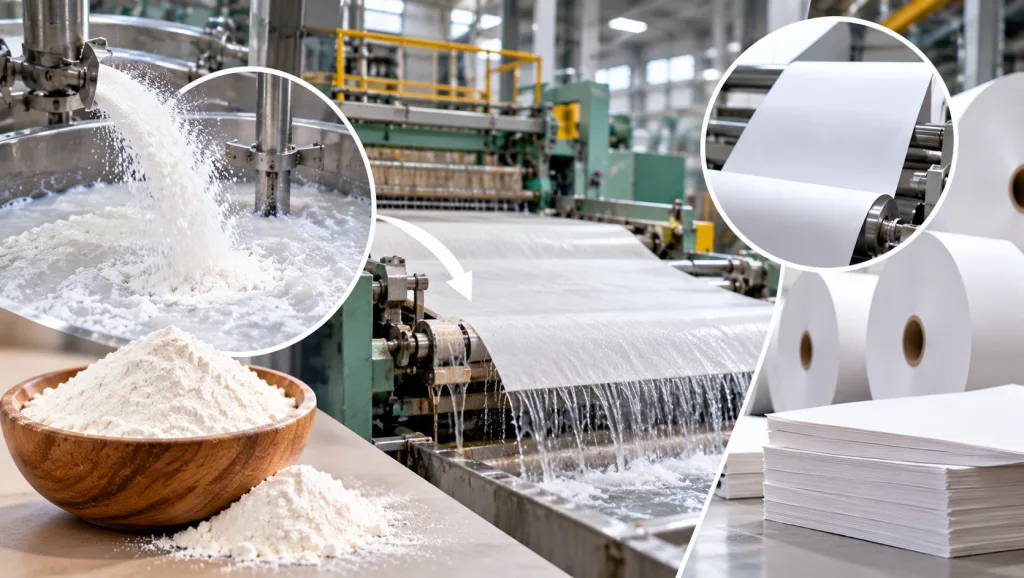
In paper manufacturing, retaining fillers and fine particles within the paper sheet is important for efficient material use and consistent paper quality. Cationic starch for filler retention helps paper manufacturers improve the interaction between cellulose fibres, fillers, and fine particles during the papermaking process.
SPAC CATA, SPAC’s cationic wet-end starch, is developed for paper and board manufacturing to improve filler and fines retention while supporting internal sheet strength.
What Is Filler Retention in Paper Manufacturing?
Fillers are materials added during papermaking to achieve specific paper properties. Fine particles and fillers can pass out of the forming sheet with process water if they are not adequately retained.
Filler retention refers to the ability of a paper machine to keep these particles within the forming paper sheet.
Effective retention helps manufacturers manage raw material use and maintain more consistent sheet formation. The results depend on the paper furnish, filler type, chemical system, and operating conditions.
How Does Cationic Starch Improve Filler Retention?
Cationic starch is a modified starch with positively charged groups. Cellulose fibres and many filler particles in papermaking systems have negatively charged surfaces. This difference in charge allows cationic starch to interact with these materials.
When used in the wet end of paper production, cationic starch can support the attachment of fine particles and fillers to fibres, helping retain them in the paper sheet.
Key functions include:
- Improved filler retention: Helps retain fillers and fines within the forming paper sheet.
- Stronger fibre bonding: Supports bonding between cellulose fibres and contributes to internal paper strength.
- Improved sheet formation: Supports the retention process during paper formation.
- More efficient material use: Better retention can reduce the amount of usable material lost through process water, depending on operating conditions.
Actual performance varies according to the paper furnish, dosage, process conditions, and compatibility with other papermaking chemicals.
Cationic Starch and Filler Retention: Key Benefits
Manufacturing requirement | Role of cationic starch |
Filler retention | Helps retain fillers and fine particles in the paper sheet |
Fibre bonding | Supports bonding between fibres and fillers |
Internal sheet strength | Contributes to improved paper strength |
Sheet formation | Supports the retention of materials during sheet formation |
Process efficiency | Can help reduce losses of fine particles through process water |
Where Is Cationic Starch Used in Paper Production?
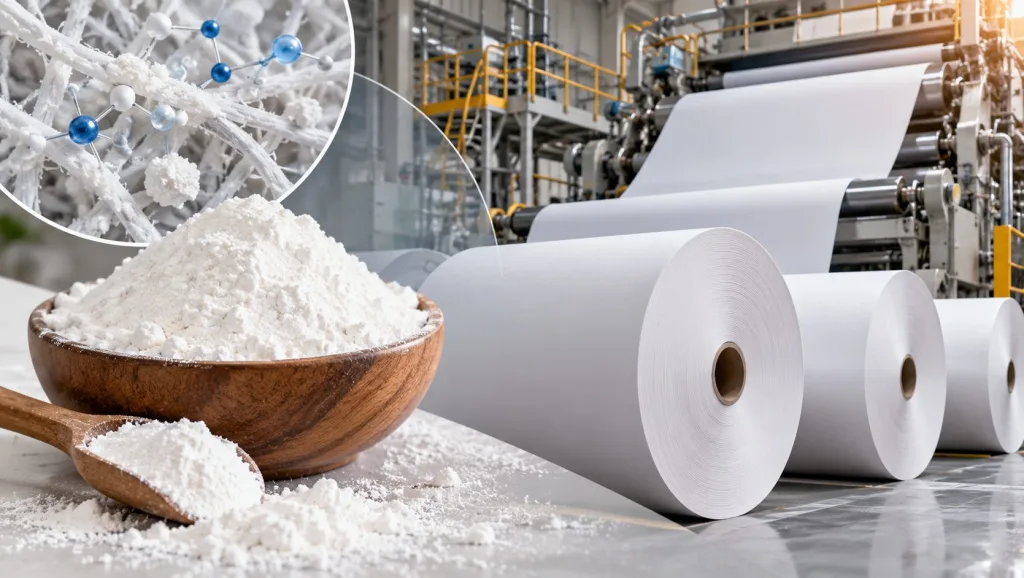
Cationic starch is used as a wet-end additive in paper and board manufacturing. Its suitability depends on the paper grade and the mill’s formulation requirements.
Paper manufacturers may evaluate cationic starch for applications involving:
- Paper sheet production
- Paperboard manufacturing
- Internal sizing systems
- Processes requiring filler and fines retention
The appropriate grade and application method should be selected according to the mill’s process conditions and required paper properties.
What Should Paper Manufacturers Consider When Selecting Cationic Starch?
Before introducing a cationic starch into a paper machine, manufacturers should assess the following:
- Paper grade: The requirements may differ between paper and board production.
- Filler and fibre characteristics: Raw materials influence retention behaviour.
- Process compatibility: The starch should be suitable for the existing wet-end chemical system.
- Technical specifications: Parameters such as moisture content, pH, viscosity, and nitrogen content should be reviewed against the product specification.
- Production trials: Trial results can help determine the suitable dosage and operating conditions.
These factors help paper manufacturers evaluate whether a cationic starch grade meets their production requirements.
SPAC CATA: Cationic Starch for Paper Manufacturing
SPAC CATA is a cationic wet-end starch derived from tapioca or maize starch. According to SPAC’s product information, it is developed for paper and board manufacturing to improve the retention of fillers and fines and support internal sheet strength.
Paper manufacturers can explore the product’s technical specifications and application details on the SPAC Cationic Starch product page.
For related paper-grade starch applications, visit SPAC’s Paper Maize Starch product page.
Frequently Asked Questions
What is cationic starch used for in paper manufacturing?
Cationic starch is used as a wet-end additive to improve the retention of fillers and fines and support bonding between fibres and other particles.
How does cationic starch help retain fillers?
Its positively charged groups interact with negatively charged cellulose fibres and filler particles, helping these materials remain within the forming paper sheet.
Does cationic starch improve paper strength?
Cationic starch can support fibre-to-fibre and fibre-to-filler bonding, contributing to internal paper sheet strength. The results depend on the paper formulation and operating conditions.
How can paper manufacturers select the right cationic starch?
Manufacturers should review the product’s technical specifications, paper grade, filler system, process conditions, and compatibility with other wet-end chemicals before conducting production trials.
Conclusion
Cationic starch plays an important role in wet-end papermaking by supporting filler and fines retention and improving fibre bonding. Selecting a suitable grade and evaluating its performance under actual production conditions can help paper manufacturers meet their sheet quality and process requirements.
For product specifications and industrial enquiries, contact SPAC Starch Products (India) Private Limited through its official website or contact page.