

What Should Food Manufacturers Look for When Choosing a Food-Grade Starch Supplier in India?
Choosing the right food-grade starch supplier is an important decision for food manufacturers. Starch is used across various food manufacturing applications, including bakery products, confectionery, beverages, convenience foods, snacks, noodles, sauces, and processed foods.
However, selecting a supplier involves more than comparing product prices. Manufacturers should evaluate the supplier’s product range, manufacturing capabilities, quality assurance practices, application suitability, and packaging options before deciding what to buy.
For businesses sourcing food-grade tapioca starch or maize starch, understanding these factors can help make procurement decisions more aligned with their manufacturing requirements.
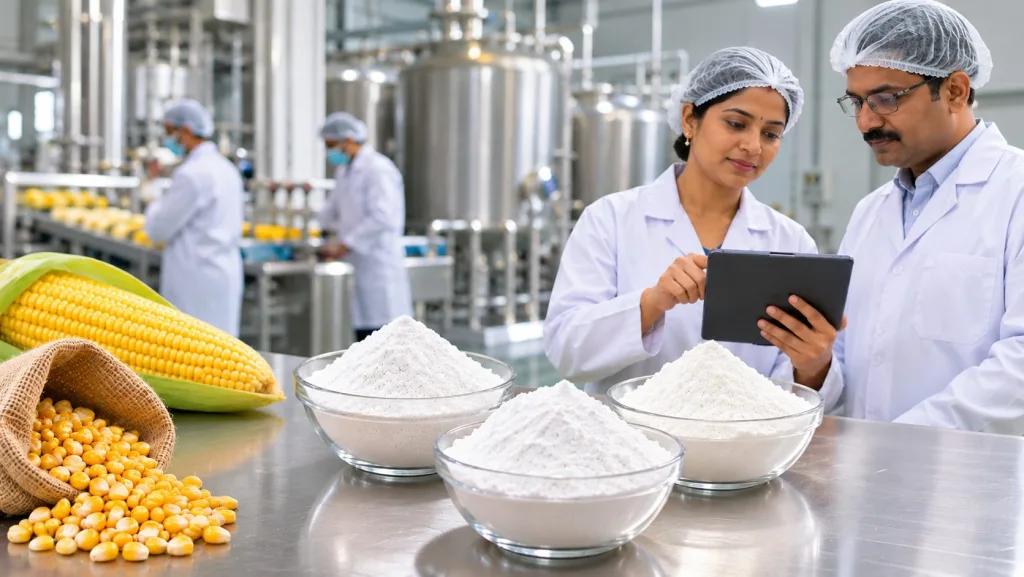
1. Check the Supplier’s Food-Grade Starch Product Range
The first step is to understand which starch products the supplier manufactures and whether they match your food production requirements.
Tapioca starch and maize starch are two product categories listed under SPAC Starch Products’ food products.
Before selecting a supplier, check:
- Whether the supplier offers food-grade starch.
- Whether tapioca and maize starch are available.
- Whether the product information matches your intended application.
- Whether the supplier can discuss specific product requirements.
Manufacturers can explore food-grade tapioca starch and food-grade maize starch to understand their respective product applications.
2. Evaluate the Starch Applications Supported by the Supplier
Different food manufacturing categories use starch products across various applications. Therefore, buyers should check whether the supplier’s product range is relevant to their manufacturing segment.
SPAC lists the following food manufacturing applications for its food-grade tapioca and maize starch products.
Food manufacturing segment | Applications listed |
Bakery products | Biscuits, cakes, cookies, crackers and donuts |
Confectionery | Chewy candy, gums, chocolates and jelly products |
Convenience foods | Soups, instant soups, sauces and gravies |
Beverages | Dairy beverages, juices, powdered drinks, tea and coffee |
Snacks | Coated nuts, fabricated potato chips and snack pellets |
Noodles and pasta | Noodles, pasta, spaghetti and wrappers |
Batters and coatings | Meat, seafood and fries coatings |
Processed meat and fish | Burger patties, chicken nuggets, meatballs and seafood products |
These applications are listed on SPAC’s product pages.
What should buyers do?
- Identify the food manufacturing category.
- Check the relevant starch product.
- Review the supplier’s stated applications.
- Discuss the intended application before finalising the purchase.
Explore SPAC’s food-grade starch applications for more product information.
3. Examine Manufacturing Capacity and Infrastructure
A supplier’s manufacturing infrastructure is another important factor to consider during procurement.
Manufacturers should understand the supplier’s production facilities and manufacturing capabilities before establishing a sourcing relationship.
Consider checking:
- Manufacturing facilities for different starch products.
- Production capacity.
- Processing infrastructure.
- Availability of quality control facilities.
- Ability to address specific customer requirements.
SPAC Starch Products (India) Private Limited was established in 1996 to manufacture tapioca starch. The company expanded its operations with integrated maize and modified starch manufacturing facilities in 2013.
According to its company information, SPAC has:
- Three independent plants for tapioca, maize, and modified starches.
- Annual manufacturing capacity of more than 1 lakh MT of starch.
- Daily crushing capacity of 800 MT of tapioca and 350 MT of maize.
- A 4.5 MW captive co-generation power plant.
Learn more about SPAC’s manufacturing facilities.
4. Review Quality Assurance and Quality Control Practices

For food manufacturers, evaluating the supplier’s quality assurance practices is an important part of procurement.
Before selecting a food-grade starch supplier, buyers should understand how the manufacturer handles product quality checks.
Consider discussing:
- Quality testing procedures.
- Quality control facilities.
- Product inspection practices.
- Quality assurance processes.
- Manufacturing practices.
SPAC states that its products undergo quality tests and are approved by its Quality Assurance Team. The company also identifies Good Manufacturing Practices (GMP) as part of its quality assurance approach.
Buyers can discuss product-specific quality documentation and requirements directly with the supplier before placing bulk orders.
5. Check Customisation and Packaging Requirements
Food manufacturers may have specific purchasing and packaging requirements depending on their procurement process.
Therefore, buyers should discuss available packaging options and customer-specific requirements with the supplier.
Packaging option | Details listed by SPAC |
50 kg bags | Available |
Jumbo bags | Available |
Printed PP woven bags | Available |
Customer-specific requirements | Available as per requirements |
Before confirming an order, discuss the required packing format and quantity with the supplier.
SPAC also states that it delivers customised products based on customers’ specific applications and requirements.
6. Evaluate the Supplier’s Market Reach and Supply Capabilities
A manufacturer’s dealer network and export presence can also be relevant when evaluating a potential sourcing partner.
Food manufacturers should understand the supplier’s business network and ability to address their purchasing requirements.
Check the following:
- Domestic dealer network.
- Export market presence.
- Product availability.
- Order and packaging requirements.
- Communication regarding customer requirements.
SPAC reports having an established dealer network across India and exporting to around 20 countries.
These details can help buyers understand the company’s market presence when evaluating it as a potential supplier.
7. Food-Grade Starch Supplier Evaluation Checklist
Before finalising a food-grade starch supplier, manufacturers can use the following checklist.
Evaluation factor | What buyers should verify |
Product range | Availability of food-grade tapioca and maize starch |
Application suitability | Whether the stated applications match production requirements |
Manufacturing facilities | Production infrastructure and manufacturing capabilities |
Quality assurance | Quality testing and quality control practices |
Packaging | Available bag sizes and packaging requirements |
Customisation | Ability to discuss specific product requirements |
Market presence | Dealer network and export presence |
Using these evaluation points can help procurement teams organise their supplier assessment before making a purchasing decision.
Looking for a Food-Grade Starch Manufacturer in India?
Selecting a suitable starch supplier is an important step in meeting food manufacturing requirements.
SPAC Starch Products (India) Private Limited manufactures tapioca, maize, and modified starches, with food-grade tapioca and maize starch included in its product range.
Food manufacturers looking for food-grade starch can explore SPAC’s product range and discuss their specific sourcing requirements with the team.
Explore SPAC’s Products: https://spacgroup.com/products-services/
Website: https://spacgroup.com/
Email: info@spacstarch.com
Contact: +91 7373162222
Contact SPAC Starch Products to discuss your food-grade starch requirements.