

Why Do Gluten-Free Bakery Products Have Different Textures Than Conventional Baked Products?
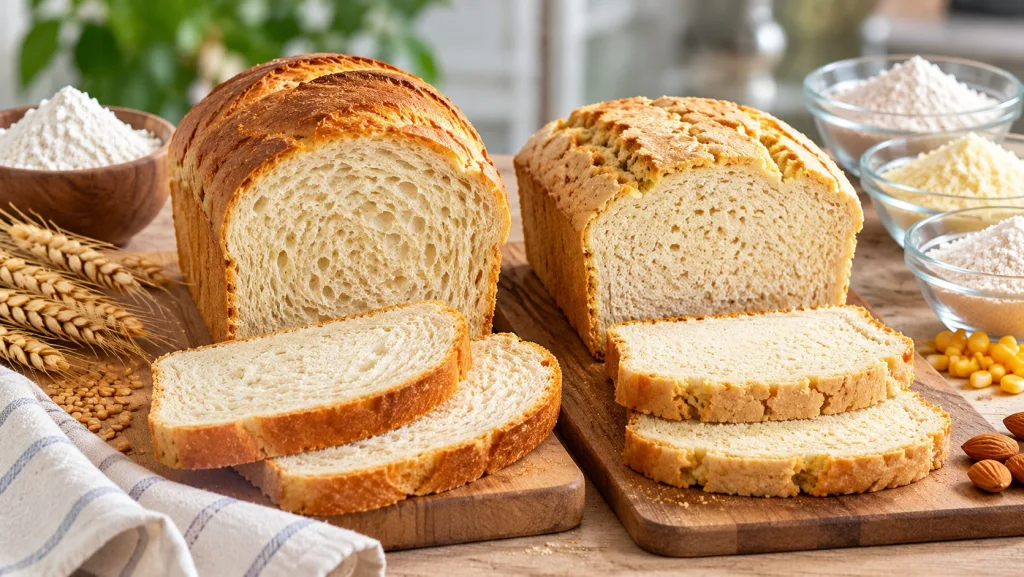
Gluten-free bakery products often have different textures from conventional baked products, even when they look similar. Gluten-free bread may feel denser, crumble more easily or become firm faster during storage. Cakes, cookies and other baked products can also differ in softness, elasticity and mouthfeel.
These differences are not simply caused by removing wheat flour. They are also related to the ingredients used to replace gluten, the behaviour of starch during baking and the way moisture is distributed throughout the product.
Understanding these factors helps food manufacturers develop gluten-free bakery formulations with more desirable texture and consistency.
1. Why Does Gluten Make a Difference in Conventional Baking?
Gluten forms when proteins in wheat flour interact with water and mixing. It creates an elastic network that helps dough stretch, retain fermentation gases and maintain its structure during baking.
In conventional bread production, this network contributes to:
- Dough elasticity and extensibility.
- Gas retention during fermentation.
- Loaf volume and crumb structure.
- The soft and resilient texture of baked bread.
Gluten-free formulations do not have this same wheat-gluten network. Therefore, manufacturers need alternative ingredients and suitable processing conditions to develop the required structure.
2. What Causes Texture Differences in Gluten-Free Bakery Products?
Several formulation and processing factors influence the final texture.
Factor | Effect on gluten-free bakery products |
Absence of gluten | Reduces dough elasticity and gas-retaining capacity |
Starch selection | Influences crumb structure, softness and overall texture |
Water absorption | Affects batter consistency and ingredient hydration |
Protein content | Influences structural support and gas-cell stability |
Baking conditions | Affect expansion, moisture loss and internal structure |
Storage conditions | Influence firmness and freshness over time |
These factors interact with one another. Changing one ingredient without adjusting the remaining formulation may produce unexpected results.
3. How Does Starch Influence Gluten-Free Baking?
Starch is an important ingredient in gluten-free bakery formulations. During baking, starch granules absorb water, swell and undergo gelatinisation. This process helps establish the internal structure of the baked product.
Different starch sources have different functional characteristics, which can influence the final product.
Tapioca starch
Tapioca starch is used in food formulations where its binding, thickening and texturising properties are required. In gluten-free bakery applications, it can contribute to chewiness and product texture.
Explore SPAC Tapioca Food Starch.
Maize starch
Maize starch is another ingredient used in food manufacturing. Its behaviour during heating and gelatinisation can influence the structure and texture of formulated bakery products.
Explore SPAC Maize Food Starch.
The suitability of either starch depends on the intended bakery product, formulation and processing requirements. Neither ingredient should be considered a universal replacement for gluten.
4. How Can Manufacturers Improve Gluten-Free Bakery Texture?
Manufacturers can investigate several formulation and production adjustments to achieve the desired product characteristics.
- Develop a suitable starch blend
Combining different gluten-free starches and flours can help balance the functional characteristics required for a particular bakery product.
- Optimise water absorption
Gluten-free ingredients differ in their water absorption and binding capacities. Manufacturers should establish suitable hydration levels through formulation trials rather than directly copying conventional wheat-based recipes.
- Consider supporting ingredients
Proteins and hydrocolloids can help provide structural support, improve water management and stabilise gas cells in gluten-free formulations.
- Review baking conditions
Baking temperature and time influence starch gelatinisation, moisture loss and the setting of the product structure. These parameters should be adjusted according to the formulation.
- Evaluate texture during storage
Manufacturers should assess the product immediately after baking and during its intended storage period. This helps identify changes in firmness, crumbliness and freshness.
5. What Should Food Manufacturers Evaluate During Formulation Trials?

Before finalising a gluten-free bakery formulation, manufacturers should examine the following characteristics:
Evaluation parameter | What to observe |
Loaf volume | Whether the product achieves the intended expansion |
Crumb structure | Whether the internal texture is uniform |
Firmness | Whether the product becomes excessively hard |
Elasticity | Whether the crumb recovers after compression |
Moisture retention | Whether the product maintains its intended texture |
Shelf-life performance | How the texture changes during storage |
Testing these parameters across different formulations helps manufacturers identify suitable ingredient combinations and processing conditions.
Frequently Asked Questions About Starch in Gluten-Free Baking
Can tapioca starch replace wheat flour completely in gluten-free baking?
Tapioca starch can be included in gluten-free flour blends, but it does not independently reproduce all the structural and functional properties of wheat flour. The formulation may require other flours, starches and supporting ingredients.
Why can gluten-free cakes become gummy after baking?
A gummy texture may result from excess water, an unsuitable starch-to-flour ratio, insufficient baking or an imbalance in the formulation. Manufacturers should review hydration, ingredient proportions and baking conditions through controlled trials.
Does the type of starch affect the softness of gluten-free bread?
Yes. Starch characteristics influence water absorption, gelatinisation and the structure of the crumb. However, softness also depends on the complete ingredient blend, processing conditions and storage.
Can manufacturers use both tapioca starch and maize starch in one bakery formulation?
They can evaluate both ingredients in a formulation, provided the blend suits the intended product. Their proportions should be determined through trials that assess texture, moisture, structure and storage performance.
Is the same starch blend suitable for gluten-free bread, cakes and biscuits?
Not necessarily. Each product has different texture and structural requirements. Bread needs a suitable crumb structure, cakes require an appropriate soft texture, and biscuits need the intended crispness or bite. Formulations should be developed for the specific product.
What should manufacturers check when sourcing starch for gluten-free products?
Manufacturers should review the starch grade, technical specifications, application suitability, quality documentation and consistency between batches. They should also verify gluten-free status and cross-contact controls where a gluten-free claim is intended.
Develop Better Gluten-Free Bakery Formulations with Suitable Starch Ingredients
Achieving desirable texture in gluten-free bakery products requires more than simply replacing wheat flour. Starch functionality, ingredient combinations, hydration and baking conditions all influence the finished product.
SPAC offers food-grade tapioca starch and maize starch for food manufacturing applications. Manufacturers can explore these product options based on their formulation and processing requirements.
Looking for starch ingredients for your food manufacturing requirements?
Contact SPAC Starch Products (India) Private Limited to discuss your product requirements.
Phone: +91 73731 62222
Email: info@spacstarch.com
Website: SPAC Group
Explore more: SPAC Products & Services