

Industrial Applications of Tapioca Starch: Beyond Food Processing
Introduction
Tapioca starch, derived from the roots of the cassava plant, has long been associated with food products such as puddings, noodles, and bakery items. However, its industrial significance extends far beyond the culinary world. In recent years, tapioca starch has emerged as a versatile, sustainable, and cost-effective raw material across multiple industries.
Its unique chemical composition, binding properties, biodegradability, and adaptability make it a valuable ingredient in manufacturing, textiles, pharmaceuticals, paper production, adhesives, and more. As industries increasingly seek eco-friendly and renewable materials, tapioca starch stands out as a reliable solution.
This blog explores the wide-ranging industrial applications of tapioca starch and explains why it is becoming an essential component in modern manufacturing processes.
Understanding Tapioca Starch: Composition and Properties
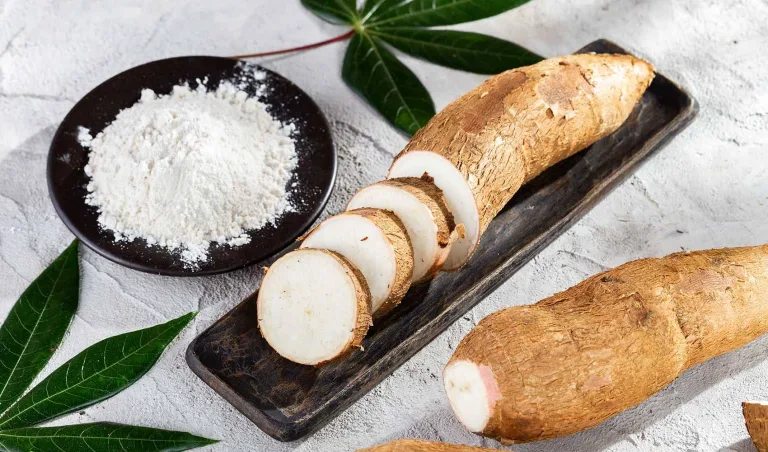
Tapioca starch is extracted from cassava roots through washing, pulping, and drying processes. It consists primarily of carbohydrates, specifically amylose and amylopectin, which determine its functional properties.
Key Properties of Tapioca Starch
- High viscosity
- Excellent binding capability
- Neutral taste and odor
- Smooth texture
- Biodegradability
- Film-forming ability
- Good stability under varying temperatures
These characteristics make it suitable for diverse industrial applications beyond food.
Role in the Paper Industry
One of the largest industrial uses of tapioca starch is in paper manufacturing. It improves paper quality and enhances processing efficiency.
Surface Sizing
Tapioca starch is used to strengthen paper surfaces, improving resistance to tearing and reducing dusting during printing.
Coating Agent
It enhances paper smoothness and printability by acting as a coating binder. This ensures better ink absorption and sharper image quality.
Wet-End Additive
In paper pulp processing, tapioca starch increases fiber bonding, improving durability and overall sheet strength.
By replacing synthetic additives with biodegradable starch, paper manufacturers reduce environmental impact.
Textile Industry Applications
In textiles, tapioca starch plays a crucial role in fabric processing.
Sizing Agent
During weaving, yarn threads require strengthening to withstand mechanical stress. Tapioca starch acts as a sizing agent, coating yarns to prevent breakage.
Fabric Finishing
It provides stiffness and enhances the texture of finished fabrics.
Printing Thickener
In textile printing, tapioca starch functions as a thickening agent, ensuring even dye application and vibrant color output.
Its natural composition makes it an environmentally friendly alternative to chemical-based finishing agents.
Adhesives and Glue Manufacturing
Tapioca starch is widely used in the production of adhesives due to its strong binding properties.
Corrugated Board Adhesives
In packaging industries, starch-based adhesives bond paper layers in corrugated boxes.
Envelope and Label Glue
It serves as a key ingredient in manufacturing adhesives for envelopes and labeling applications.
Wood Adhesives
Modified tapioca starch formulations are used in plywood and particle board manufacturing.
Starch-based adhesives are biodegradable, cost-effective, and safe for various industrial uses.
Pharmaceutical Applications
In the pharmaceutical sector, tapioca starch plays a supporting yet vital role.
Tablet Binder
It helps bind active ingredients together during tablet manufacturing.
Disintegrant
Tapioca starch assists tablets in breaking down effectively after ingestion, ensuring proper absorption.
Filler
Its neutral nature makes it suitable as a filler material in capsules and tablets.
Pharmaceutical-grade tapioca starch meets strict purity and safety standards.
Biodegradable Packaging Solutions
With sustainability becoming a priority, tapioca starch is widely used in eco-friendly packaging materials.
Bioplastics
Tapioca starch is processed into biodegradable plastic alternatives that decompose naturally.
Compostable Bags
Starch-based materials are used in producing eco-friendly carry bags.
Cushioning Materials
It serves as a base for biodegradable foam packaging used in protective shipping materials.
These applications reduce reliance on petroleum-based plastics.
Construction Industry Uses
Tapioca starch contributes to construction materials as well.
Cement Additives
Modified starch improves cement consistency and workability.
Gypsum Board Manufacturing
It acts as a binder in drywall production.
Tile Adhesives
Starch derivatives enhance bonding strength in tile installation materials.
Its natural origin aligns with green building initiatives.
Mining and Drilling Applications
In mining and oil drilling, tapioca starch plays a functional role.
Drilling Fluids
It stabilizes drilling fluids and reduces fluid loss during extraction processes.
Mineral Processing
Tapioca starch assists in separating valuable minerals from ores.
Its eco-friendly nature makes it suitable for environmentally sensitive operations.
Role in Animal Feed Production
Although not directly related to human food processing, tapioca starch supports animal nutrition industries.
Energy Source
It provides a high-energy carbohydrate source for livestock feed.
Pellet Binding
It acts as a binder in feed pellet manufacturing, ensuring durability and uniformity.
Advantages of Tapioca Starch in Industrial Applications
Renewable Resource
Cassava grows efficiently in tropical climates, making tapioca starch a sustainable raw material.
Biodegradable and Eco-Friendly
It decomposes naturally, reducing environmental impact.
Cost-Effective
Compared to synthetic chemicals, tapioca starch offers economical production options.
Versatile Functionality
Its adaptability allows chemical modification for specialized industrial uses.
Safe Handling
Non-toxic and safe for workers during processing and application.
Modified Tapioca Starch for Specialized Uses
Industrial processes often require enhanced functionality. Modified tapioca starch undergoes physical or chemical treatment to improve:
- Thermal stability
- Viscosity control
- Adhesion strength
- Water resistance
- Shelf stability
These modifications expand its usability across demanding industrial environments.
Growth of Tapioca Starch Manufacturers in India
India has become a significant producer of tapioca starch due to favorable climatic conditions for cassava cultivation. The rise of tapioca starch manufacturers in India has strengthened the country’s role in supplying high-quality starch to global markets.
Manufacturers focus on:
- Advanced extraction technology
- Quality consistency
- Food and industrial-grade variants
- Compliance with international standards
- Sustainable production practices
The increasing global demand for biodegradable materials has further accelerated industry growth.
How SPAC Supports Industrial Innovation
SPAC has established itself as a trusted name in delivering high-quality starch solutions for diverse industrial applications. With a focus on precision processing and quality assurance, SPAC caters to sectors including paper, textiles, adhesives, pharmaceuticals, and packaging.
Key strengths include:
- Strict quality control measures
- Customized starch formulations
- Advanced manufacturing facilities
- Sustainable sourcing of raw materials
- Reliable supply chain management
SPAC ensures that industries receive starch products tailored to their specific performance requirements.
Choosing Reliable Tapioca Starch Manufacturers in India
Selecting dependable tapioca starch manufacturers in India is crucial for businesses seeking consistent product quality and technical support.
Important considerations include:
- Production capacity
- Quality certifications
- Research and development capabilities
- Environmental compliance
- Customer service support
SPAC stands out by combining technical expertise with industry experience, ensuring reliable supply and high-performance starch products for industrial use.
Conclusion
Tapioca starch has evolved far beyond its traditional role in food processing. Its unique chemical properties, sustainability benefits, and versatility make it a valuable ingredient across industries such as paper, textiles, adhesives, pharmaceuticals, construction, mining, and biodegradable packaging.
As industries continue to prioritize eco-friendly and renewable raw materials, tapioca starch offers an effective alternative to synthetic chemicals. The growth of tapioca starch manufacturers in India has strengthened global supply chains and supported innovation in sustainable industrial practices.
By partnering with established brands like SPAC, businesses gain access to high-quality starch solutions tailored to modern industrial demands. The future of tapioca starch lies in its ability to bridge performance and sustainability—proving that natural materials can drive industrial progress beyond food processing.