

Maize Starch vs Tapioca Starch: Which Is Better for Your Industry?
Key Benefits of Thin Boiling Starch in Textile Weaving
When industrial buyers look for the right starch for their production process, two names come up more than any other: maize starch and tapioca starch. Both are natural, plant-based starches widely used across food, textile, paper, pharmaceutical, and adhesive industries. Both are white, fine powders that thicken, bind, and stabilize. But beneath those similarities, they are quite different in terms of source, properties, performance, and the industries they serve best.
Choosing the wrong starch can affect your product quality, increase your production costs, and create processing problems on the shop floor. So this blog is a practical, industry-focused guide to help you understand exactly what makes these two starches different and which one is the right fit for your specific application.
Where Do They Come From?
Maize starch, also known as corn starch, is extracted from the endosperm of the corn kernel through a wet milling process. India is one of the largest producers of maize, with cultivation concentrated in states like Maharashtra, Karnataka, Madhya Pradesh, and Bihar. This abundant raw material supply makes maize starch consistently available across the year.
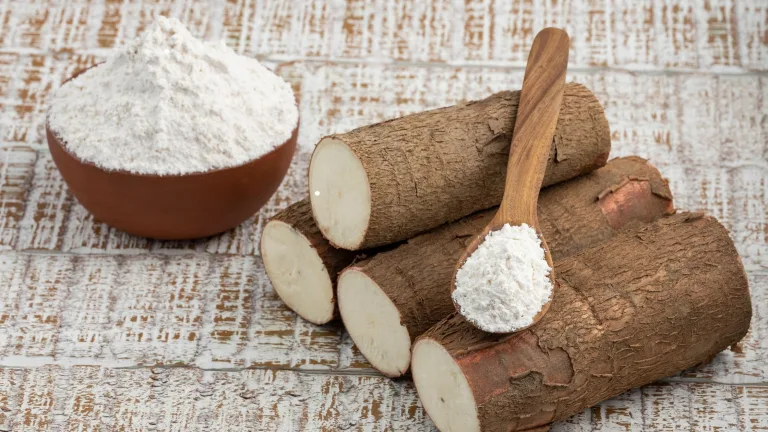
Tapioca starch, on the other hand, is derived from the roots of the cassava plant, also known as tapioca. Tamil Nadu, Kerala, and Andhra Pradesh are the primary tapioca-growing regions in India. The cassava root is peeled, washed, and processed quickly after harvesting because it deteriorates fast. This means tapioca starch production is closely tied to regional availability and harvest cycles.
Both sources are renewable, natural, and non-toxic. But their different origins give them different chemical compositions, which directly impacts how they behave in your production process.
Key Differences in Properties
The two starches differ at the molecular level, and those differences show up clearly in industrial applications.
Maize starch has a higher amylose content, typically around 25 to 28 percent. Amylose is the component that forms strong, firm gels and stable films when cooled. This makes maize starch excellent for applications that require controlled viscosity, strong binding, and film-forming properties. It has a higher gelatinization temperature, which means it needs more heat to cook out but produces a more stable, opaque paste.
Tapioca starch has a higher amylopectin content, which makes it more transparent when cooked and gives it a softer, more elastic gel texture. It gelatinizes at a lower temperature, which means it requires less energy to process. Tapioca starch also has a neutral flavor and odor, which is a strong advantage in food applications where taste purity matters.
In simple terms: maize starch is stronger, more stable, and better for industrial performance. Tapioca starch is softer, more transparent, and better for food-grade and clean-label applications.
Performance in the Food Industry
Both starches are used widely in food processing, but they perform differently and suit different types of products.
Maize starch is the go-to choice for thickening soups, gravies, sauces, bakery creams, and puddings. It gives a clean, smooth texture and holds up well during heating. Modified maize starch is used extensively in processed foods, dairy products, confectionery, and frozen food because it can handle high temperatures, acidic conditions, and freeze-thaw cycles.
Tapioca starch shines in gluten-free food products, chewy confectionery items like gummies and bubble tea pearls, and dairy-based desserts. Its neutral taste makes it ideal for clean-label products where consumers want simple, recognizable ingredients. It also works well in noodles, bakery items, and snacks where elasticity and a soft bite are important.
If your food product requires long shelf life, high-temperature processing, or a structured gel: choose maize starch. If your product is gluten-free, clean-label, or requires a soft, chewy, or transparent quality: tapioca starch is the better option.
Performance in the Textile Industry
The textile industry is one of the largest consumers of starch in India. Both maize starch and tapioca starch are used in yarn sizing, fabric finishing, and textile printing.
Maize starch, particularly modified grades like thin boiling starch, is preferred for high-speed weaving machines. It forms a strong protective film around the yarn, improves tensile strength, and reduces yarn breakage during the weaving process. Its controlled viscosity ensures even application and quick drying. Modified maize starch is also used in textile printing pastes where consistent color depth and even distribution are required.
Tapioca starch is commonly used for traditional sizing applications and in manual or semi-automatic textile units. It gives a good finish to fabric but does not perform as consistently as maize starch under the high mechanical stress of modern automated looms. However, it remains cost-effective for basic sizing needs.
For textile mills using modern high-speed looms: maize starch or modified maize starch is the clear choice. For smaller units focused on cost and basic finishing: tapioca starch is a practical option.
Performance in the Paper Industry
Paper manufacturers rely on starch to improve sheet strength, surface coating, printability, and bonding in corrugated boards.
Maize-based modified starches, especially oxidized starch, cationic starch, and thin boiling starch, dominate the paper industry because of their excellent film-forming ability, low viscosity at high concentrations, and consistent performance in surface sizing machines. Cationic maize starch is widely used in the wet end of the paper machine to improve fiber retention and paper strength. Oxidized maize starch is the preferred choice for surface coating where a smooth, printable surface is needed.
Tapioca-based starches are also used in paper and corrugated board manufacturing, especially as ply bond adhesives and spray starches in board lamination. They offer good adhesion and are well suited for corrugated packaging applications where strong ply bonding is the primary requirement.
For premium writing paper, coated paper, and printing grades: maize starch products are superior. For corrugated board and basic packaging: tapioca starch is equally effective and often more economical.
Performance in Pharmaceutical and Adhesive Industries
In pharmaceuticals, maize starch has a long-established role as a binder, disintegrant, and filler in tablets and capsules. It meets USP, IP, and BP standards, making it acceptable for regulated markets globally. Its consistency, purity, and well-documented safety profile make it the standard choice for pharmaceutical manufacturers.
Tapioca starch is also used in pharmaceutical formulations, particularly in specialty applications and in regions where cassava is the dominant raw material. However, it is less widely specified than maize starch in global pharmacopeial standards.
In adhesives, both starches are used, but yellow dextrin and white dextrin derived from maize are the most commonly used starch-based adhesives for envelopes, labels, and corrugated box manufacturing.
Why SPAC Group Stands Apart as a Leading Maize Starch Manufacturer and Starch Supplier in India
Choose the Right Starch with SPAC Group, Your Trusted Starch Supplier in India
The choice between maize starch and tapioca starch is not always straightforward. It depends on your industry, your process conditions, your quality requirements, and your budget. That is why working with an experienced Starch Supplier in India who understands both products in depth is so important.
SPAC Group does not just supply starch. The team actively works with clients to understand their specific application requirements and recommend the most suitable grade and type. With an annual manufacturing capacity of over 1 lakh metric tonnes, a dealer network across all of India, and exports to over 20 countries, SPAC Group has the scale and expertise to meet any demand reliably and on time.
Whether you need native maize starch, food-grade tapioca starch, or any modified starch variant, SPAC Group delivers consistent quality that meets international standards including ISO, FSSAI, GMP, and USP. Visit www.spacgroup.com or contact the SPAC Group team today to discuss your starch requirements and get a customized solution for your industry.
Conclusion
Maize starch and tapioca starch are both outstanding industrial ingredients, but they are not interchangeable. Maize starch leads in performance for textile sizing, paper coating, pharmaceutical formulation, and high-temperature food processing. Tapioca starch leads in clean-label food applications, gluten-free products, and basic corrugated packaging. The best decision is an informed one based on your specific production needs. As a leading Maize Starch Manufacturer and Starch Supplier in India, SPAC Group gives you access to both, backed by decades of manufacturing expertise, rigorous quality control, and a genuine commitment to your industry’s success.