

Role of Maize Starch in Circular Economy??
Introduction
The global shift toward sustainability has transformed how industries think about raw materials, production processes, and waste management. At the heart of this transformation lies the concept of the circular economy—a system designed to eliminate waste, extend resource life cycles, and regenerate natural systems. In this framework, bio-based materials are playing an increasingly vital role.
Maize starch stands out as one of the most versatile and environmentally responsible ingredients supporting circular economic models. Derived from renewable agricultural sources, it offers biodegradability, adaptability, and resource efficiency across multiple industries. This article explores how maize starch contributes meaningfully to circular economy principles and why it is gaining global attention.
Understanding the Circular Economy Concept
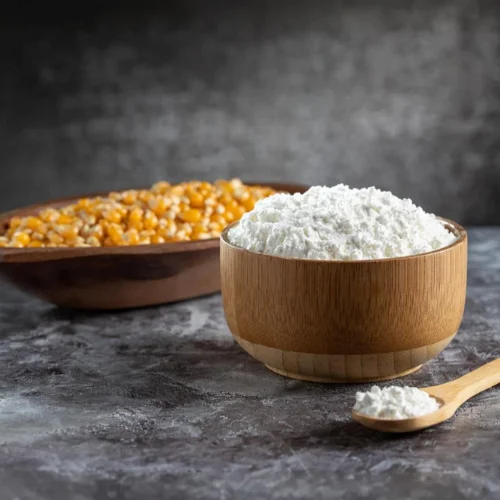
A circular economy moves away from the traditional “take, make, dispose” model and replaces it with a regenerative system where materials are reused, recycled, and reintegrated into production cycles.
Key principles include:
- Reducing dependency on finite resources
- Designing products for reuse and recyclability
- Minimizing waste and emissions
- Promoting renewable and biodegradable inputs
Maize starch aligns naturally with these principles due to its plant-based origin and functional versatility.
Maize Starch as a Renewable and Sustainable Resource
Unlike petroleum-based materials, maize starch is derived from corn, a renewable agricultural crop. With proper cultivation practices, maize can be grown season after season without depleting natural reserves.
Its renewable nature supports:
- Reduced reliance on fossil fuels
- Lower carbon footprint
- Sustainable agricultural value chains
This makes maize starch an ideal ingredient in industries aiming to transition toward circular production systems.
Biodegradability and Environmental Compatibility
One of the strongest contributions of maize starch to the circular economy is its biodegradability. Products made using maize starch can naturally decompose under suitable conditions, returning nutrients to the ecosystem rather than accumulating as waste.
Environmental benefits include:
- Reduced landfill accumulation
- Minimal soil and water contamination
- Support for compostable product design
Biodegradability ensures materials re-enter the natural cycle rather than becoming environmental burdens.
Role in Reducing Plastic Dependency
Maize starch is widely used as a base material or additive in biodegradable plastics. These bio-polymers help reduce dependence on conventional plastics derived from crude oil.
Its use enables:
- Development of compostable packaging
- Replacement of single-use plastics
- Lower greenhouse gas emissions
By supporting sustainable alternatives, maize starch plays a direct role in tackling plastic pollution.
Contribution to Waste Minimization
In circular systems, waste is viewed as a resource. Maize starch-based materials are often designed to be reused, recycled, or composted.
This contributes to:
- Reduced post-consumer waste
- Efficient material recovery
- Integration into organic waste streams
Such characteristics align perfectly with circular waste management strategies.
Energy Efficiency in Manufacturing Processes
Compared to synthetic polymers, maize starch-based products typically require lower processing temperatures and energy inputs.
Advantages include:
- Reduced energy consumption
- Lower production emissions
- Improved operational sustainability
Energy-efficient processing further strengthens its role in sustainable industrial models.
Supporting Bio-Based Industrial Applications
Maize starch finds application across numerous sectors, including:
- Paper and packaging
- Textiles and sizing
- Adhesives and binders
- Food and pharmaceuticals
Its adaptability allows industries to replace synthetic inputs with renewable alternatives without compromising performance.
- Paper and packaging
Agricultural Value Chain Integration
Circular economy principles extend beyond manufacturing into agriculture. Maize starch production supports farming communities and agricultural waste utilization.
This integration:
- Creates value from agricultural outputs
- Supports rural economies
- Encourages sustainable crop management
By connecting agriculture with industrial sustainability, maize starch strengthens circular value chains.
Reduction of Carbon Footprint
Maize plants absorb carbon dioxide during growth, partially offsetting emissions generated during processing. When compared to fossil-based materials, maize starch demonstrates a significantly lower carbon footprint.
Climate benefits include:
- Carbon sequestration during cultivation
- Reduced lifecycle emissions
- Compatibility with low-carbon production goals
This makes maize starch a climate-positive material choice.
Compatibility with Circular Product Design
Circular product design emphasizes materials that are easy to reuse, recycle, or compost. Maize starch meets these criteria through its chemical adaptability.
Design advantages include:
- Customizable properties
- Safe disposal pathways
- Compatibility with eco-design standards
This flexibility enables manufacturers to innovate responsibly.
Role in Sustainable Packaging Solutions
Packaging is a major contributor to global waste. Maize starch-based solutions enable eco-friendly packaging that aligns with circular economy principles.
Benefits include:
- Compostable packaging options
- Reduced environmental impact
- Improved brand sustainability credentials
Such solutions are increasingly favored by eco-conscious consumers and regulators.
Innovation and Research Driving Circular Applications
Ongoing research continues to expand the circular applications of maize starch. Advances in modification techniques are improving its strength, durability, and performance.
Innovation focuses on:
- Enhanced bio-plastics
- Improved recyclability
- New industrial formulations
Continuous innovation ensures maize starch remains relevant in evolving sustainability landscapes.
Importance of Maize Starch Supplier in India for Circular Economy Growth
A reliable maize starch supplier in India plays a crucial role in supporting sustainable manufacturing ecosystems. By delivering consistent quality and scalable supply, such suppliers enable industries to adopt circular practices effectively.
Their role includes:
- Supporting eco-friendly production
- Ensuring raw material consistency
- Facilitating sustainable innovation
Strong supply chains are essential for circular economy success.
How a Maize Starch Supplier in India Supports Sustainable Industries
A responsible maize starch supplier in India contributes beyond material supply by aligning production with environmental goals.
They support:
- Reduced environmental impact
- Ethical sourcing practices
- Compliance with sustainability standards
This partnership enables industries to confidently shift toward circular models.
SPAC’s Role in Advancing Circular Economy Practices
- Environmentally responsible production
- Application-specific starch solutions
- Long-term sustainability goals