

Why Does Yarn Break During Weaving After Sizing? Starch-Related Causes
Why Does Yarn Break During Weaving After Sizing?

Yarn sizing is an important preparation step in weaving, particularly for warp yarns that experience repeated tension and abrasion during loom operation. A suitable sizing formulation can help form a protective film around the yarn, control hairiness and improve its resistance to mechanical stress.
However, yarn breakage can still occur after sizing. When this happens, the problem may not necessarily be with the yarn alone. Starch grade, viscosity, concentration, sizing pickup, drying conditions, film formation and process consistency can all influence the final weaving performance.
For textile mills experiencing repeated warp breaks, understanding the relationship between starch selection and sizing-process conditions is an important starting point.
What Does Starch Do During Yarn Sizing?
During sizing, a starch-based formulation is applied to yarn before weaving. After drying, the size forms a film around the yarn.
The sizing process is generally intended to help:
- Improve yarn surface smoothness
- Reduce hairiness
- Improve resistance to abrasion
- Support yarn handling during weaving
- Improve film formation
- Maintain suitable yarn flexibility
- Reduce the likelihood of mechanical damage during loom operation
SPAC’s textile starch products are designed for applications including yarn weaving, with product characteristics such as viscosity and film properties considered for textile sizing applications.
7 Starch-Related Causes of Yarn Breakage After Sizing
1. Unsuitable Starch Grade
Different textile processes can require different starch characteristics. A starch selected without considering the yarn, sizing equipment and weaving conditions may not provide the required film-forming behaviour.
The appropriate grade should be considered based on:
- Yarn type
- Yarn count
- Sizing process
- Required viscosity
- Sizing concentration
- Required film properties
- Weaving conditions
For textile mills, selecting a tapioca starch suitable for textile sizing should therefore be based on the actual process rather than the product name alone.
2. Incorrect Starch Concentration
The concentration of starch in the sizing formulation can influence the amount of material deposited on the yarn.
If the concentration is not properly controlled, mills may observe:
- Insufficient protective coating
- Excessive coating
- Changes in yarn flexibility
- Uneven sizing
- Variation between production batches
The sizing formulation should therefore be monitored consistently rather than adjusted only after weaving problems appear.
3. Unstable Viscosity
Viscosity influences how the sizing solution flows and interacts with the yarn.
Significant changes in viscosity can affect:
- Size penetration
- Film formation
- Sizing pickup
- Coating uniformity
- Drying behaviour
For textile applications, SPAC’s thin-boiling starch products are positioned around low and uniform viscosity, along with film properties relevant to yarn sizing and weaving.
4. Poor Film Formation
The protective film formed around the yarn needs to provide suitable coverage without making the yarn excessively rigid.
Poor film formation may contribute to:
- Increased surface abrasion
- Uneven yarn protection
- Higher hairiness
- Reduced resistance during loom movement
- Increased warp breakage
The problem should be evaluated together with starch grade, concentration, cooking conditions and drying conditions.
5. Incorrect Sizing Pickup
Sizing pickup refers to the amount of sizing material deposited onto the yarn.
Factors that can influence sizing pickup include:
- Size concentration
- Viscosity
- Sizing speed
- Roller pressure
- Yarn characteristics
- Drying conditions
- Sizing equipment settings
6. Drying Conditions
Drying is another important stage in the sizing process.
Inconsistent drying can affect the final size film and yarn characteristics. Textile mills should monitor the relationship between:
Sizing Application → Drying → Yarn Moisture → Film Formation → Weaving Performance
If yarn is becoming excessively stiff or the size film is not forming consistently, drying conditions should be reviewed along with the formulation.
7. Batch-to-Batch Variation
Even when the sizing recipe remains unchanged, differences in incoming starch characteristics can affect process performance.
Quality teams should compare relevant parameters between batches, such as:
Parameter | What to Monitor |
Starch grade | Confirm the specified product |
Viscosity | Check consistency |
Moisture | Monitor incoming material |
pH | Verify against specification |
Concentration | Maintain formulation consistency |
Sizing pickup | Check application level |
Drying conditions | Maintain process control |
Warp breaks | Track loom performance |
A batch comparison can help determine whether the problem originated from the raw material, formulation or sizing process.
How to Diagnose Yarn Breakage After Sizing
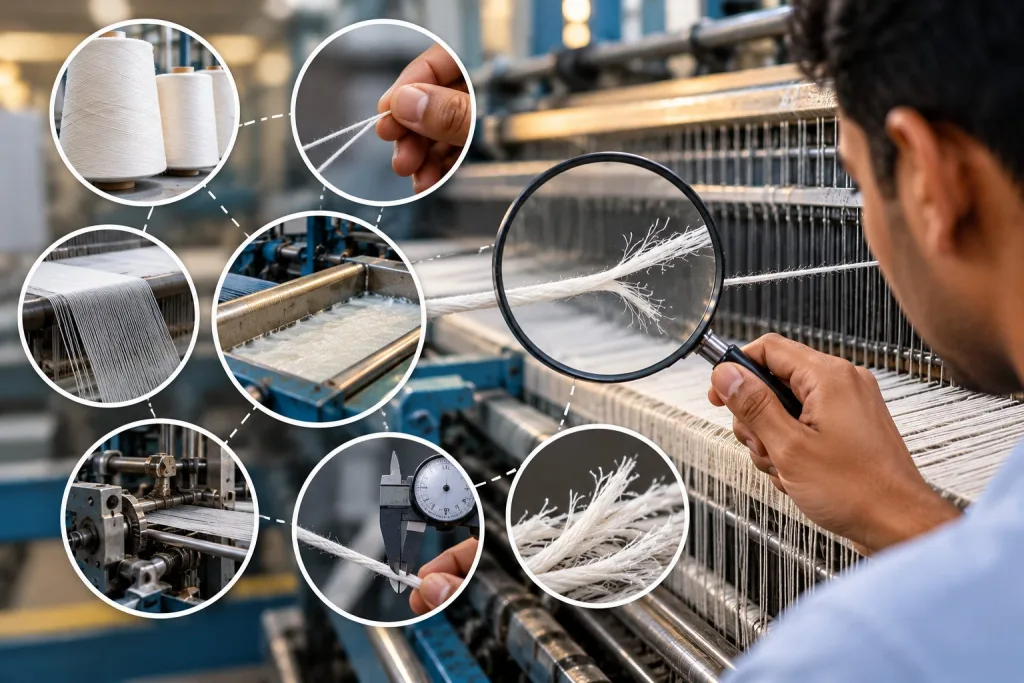
Instead of immediately changing the starch, textile mills should follow a structured troubleshooting process.
Step 1: Identify Where the Break Occurs
Determine whether the break occurs:
- During sizing
- During drying
- During winding
- At the loom
- At a particular machine or loom position
Step 2: Compare Sizing Parameters
Review:
- Starch concentration
- Viscosity
- Sizing pickup
- Drying temperature
- Machine speed
- Roller pressure
Step 3: Compare Different Batches
Check whether yarn performance changed after a new starch batch or formulation change.
Step 4: Examine Yarn Behaviour
Look for:
- Excessive hairiness
- Stiffness
- Uneven coating
- Surface damage
- Abrasion marks
Step 5: Review the Starch Specification
If the process parameters are controlled but breakage continues, review whether the selected starch grade matches the textile application’s requirements.
Yarn Sizing Troubleshooting: Quick Reference
Problem Observed | Possible Area to Investigate |
Frequent warp breaks | Yarn quality and sizing formulation |
Excessive hairiness | Film formation and sizing pickup |
Uneven coating | Viscosity and application conditions |
Excessive stiffness | Concentration and drying conditions |
Abrasion during weaving | Film quality and yarn surface |
Variation between batches | Incoming starch and process control |
Changing loom performance | Sizing consistency and machine settings |
This table should be used as a diagnostic starting point, not as proof that starch is the sole cause of yarn breakage.
Choosing the Right Starch for Textile Sizing
When selecting starch for textile applications, manufacturers should consider the complete process rather than looking at viscosity alone.
Important factors include:
- Yarn type and count
- Sizing equipment
- Required viscosity
- Film-forming properties
- Sizing concentration
- Desired sizing pickup
- Drying conditions
- Loom speed
- Abrasion requirements
- Batch consistency
For manufacturers looking for textile tapioca starch for yarn sizing, SPAC provides starch solutions designed for textile applications, including yarn weaving and sizing requirements.
The product selection should ultimately be matched to the mill’s yarn, sizing process and required weaving performance.
A Practical Yarn Breakage Checklist
Before changing the starch grade, check:
- ✓ Is the starch grade correct for the application?
- ✓ Is starch concentration consistent?
- ✓ Is viscosity within the required specification?
- ✓ Is sizing pickup being monitored?
- ✓ Is the size film uniform?
- ✓ Are drying conditions consistent?
- ✓ Has the yarn count or yarn supplier changed?
- ✓ Did the problem begin after a new starch batch?
- ✓ Are breaks concentrated on a particular loom?
- ✓ Has the complete sizing process been reviewed?
A structured checklist can help textile production and quality teams identify whether the issue is related to raw material, formulation, equipment or process conditions.
Frequently Asked Questions About Starch Performance
Why does yarn break during weaving after sizing?
Yarn breakage after sizing can be associated with several factors, including unsuitable starch grade, sizing concentration, viscosity, sizing pickup, film formation, drying conditions, yarn properties and loom conditions.
Can starch cause warp yarn breakage?
Yes, starch-related factors can contribute to sizing-related yarn performance problems. However, yarn quality, machine settings and weaving conditions should also be evaluated before identifying starch as the primary cause.
How does starch viscosity affect yarn sizing?
Viscosity can influence how the sizing solution is applied to the yarn and can affect coating uniformity, penetration and film formation. The suitable viscosity depends on the specific sizing process and application.
What is sizing pickup?
Sizing pickup is the amount of sizing material deposited on the yarn. It can be calculated by comparing the yarn weight before and after sizing.
How can textile mills reduce yarn breakage after sizing?
Start by checking starch grade, concentration, viscosity, sizing pickup, drying conditions and film formation. Then compare the results with yarn and loom performance data.
Which starch is used for textile yarn sizing?
Starch products based on materials such as tapioca can be used in textile sizing, depending on the required application and process characteristics. The grade should be selected according to the yarn, sizing equipment and desired performance.
Should I change the starch immediately if yarn breakage increases?
Not necessarily. First compare the current process with previous batches and review yarn quality, sizing parameters, equipment settings and weaving conditions. This helps identify the actual source of the change.
Need a Textile Starch Solution for Your Sizing Process?
If your textile mill is experiencing warp breakage, inconsistent sizing pickup, viscosity variation or film-formation issues, share your yarn type, sizing process, current starch specification and observed weaving problem with SPAC.